
The Polyphagous Shot-Hole Borer (PSHB) (Euwallacea fornicatus) is a small invasive beetle native to Southeast Asia. It is about 2mm long, roughly the size of a sesame seed, and can infest more than 500 tree and plant species.
PSHB was first detected in East Fremantle in August 2021. A Quarantine Area now covers the Perth metropolitan area, including the City of Swan, to help slow its spread and protect Western Australia’s trees, forests and horticultural industries.
The Department of Primary Industries and Regional Development (DPIRD) is leading the response to PSHB. The City is working with DPIRD and neighbouring local governments to protect our urban tree canopy and natural environment.
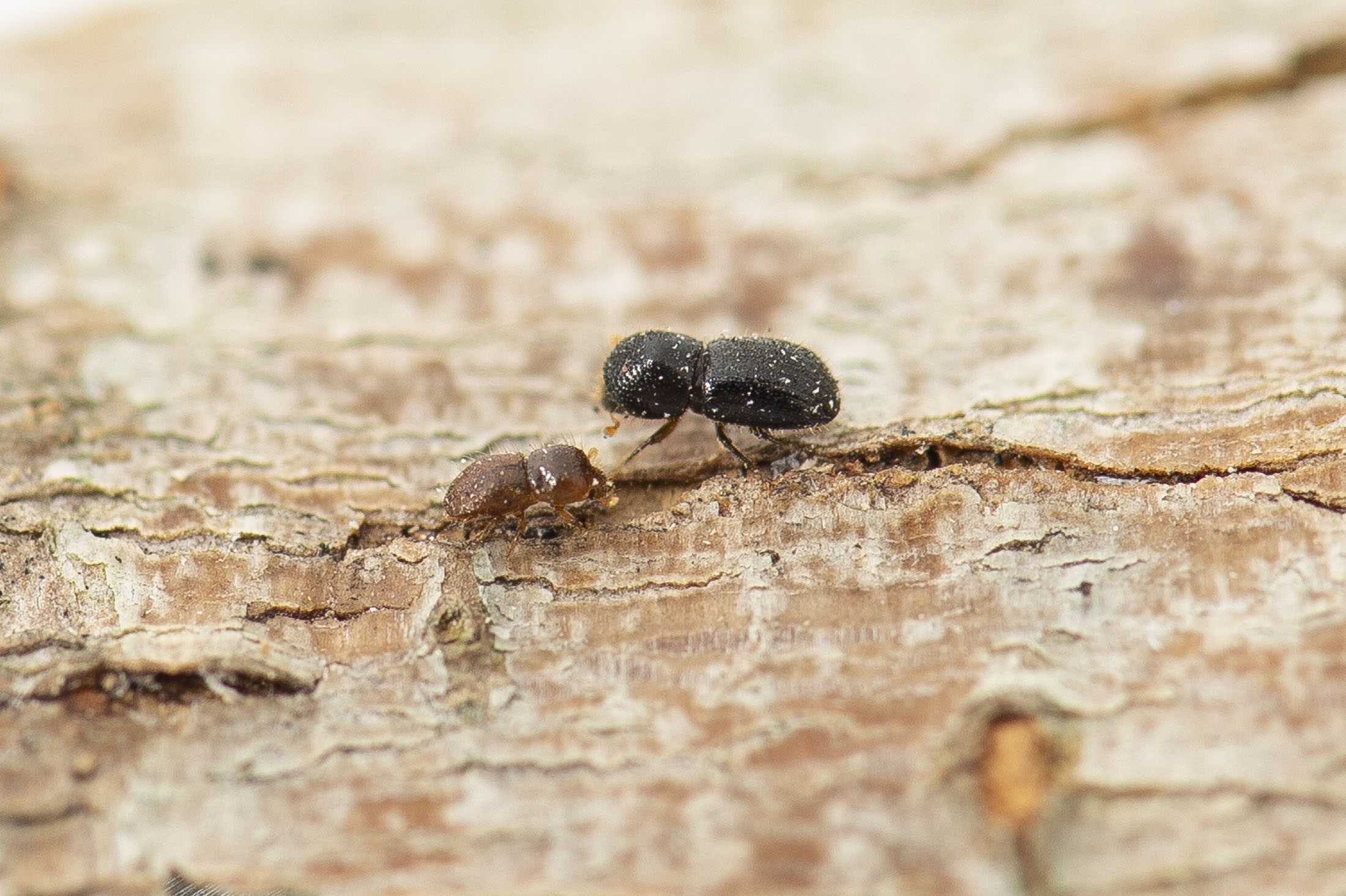
A male (left) and female (right) polyphagous shot-hole borer. Image courtesy of the DPIRD.
Report suspected PSHB section
Early reporting can help slow the spread of PSHB. If you notice signs of PSHB, even if you are unsure:
- Report it through the MyPestGuide Reporter app
- Call the Exotic Plant Pest Hotline on 1800 084 881
- Contact DPIRD’s Pest and Disease Information Service on (08) 9368 3080 or email padis@dpird.wa.gov.au.
Do not prune, remove or dispose of a tree you suspect is infested until you have received advice from DPIRD.
On June 18, 2025, the National Management Group determined that eradicating PSHB was no longer technically feasible.
This decision was based on several factors, including the difficulty of detecting and controlling infestations before the beetles reproduce and the lack of an effective chemical treatment for eradication.
The national response has now moved from eradication to long-term management. The response focuses on slowing the spread of PSHB through:
- Surveillance
- Integrated pest management
- Management of infested trees
- Movement restrictions
- Research and technical support
- Community and industry education.
Under the Transition to Management response plan, DPIRD’s pruning and tree removal program focuses on trees in the outer Perth metropolitan area that present a risk of spreading PSHB beyond the Quarantine Area. Other landowners and land managers are responsible for managing affected trees on their properties, with guidance from DPIRD.
DPIRD continues to work with local governments, community groups and industry organisations to protect Perth’s urban tree canopy and build resilience against PSHB.For current information, read the DPIRD Transition to Management frequently asked questions.
The WA Government has established quarantine restrictions covering the Perth metropolitan area, including the City of Swan, to help slow the spread of PSHB.
The PSHB Quarantine Area covers metropolitan Perth and has two zones:
- The Management Zone, where PSHB is more established
- The Containment Zone, covering outer metropolitan areas.
Movement restrictions apply to firewood, green waste, mulch, woody plant material and live plants. As the City of Swan spans both zones, check the current quarantine map before moving these materials.
Management Zone
You:
- Cannot move untreated or unseasoned wood outside the zone unless it is chipped to 2.5cm or smaller
- Cannot move live plants or plant material with stems or branches wider than 2cm outside the zone
- Must clean machinery and equipment before moving it outside the zone
- Can move wood and plant material within the zone.
Containment Zone
You:
- Cannot move untreated or unseasoned wood outside the Quarantine Area unless it is chipped to 2.5cm or smaller
- Cannot move live plants or plant material with stems or branches wider than 2cm outside the Quarantine Area
- Must clean machinery and equipment before moving it outside the Quarantine Area
- Can move wood and plant material within the Containment Zone or into the Management Zone.
Disposing of green waste
Green waste can be taken to an approved PSHB waste management facility. These include the City’s Bullsbrook and Malaga recycling centres and the Red Hill Waste Management Facility. Check opening hours, fees and disposal requirements before visiting.
When transporting green waste:
- Contain and cover the entire load
- Use a sealed trailer, truck or skip bin
- Clean your vehicle and equipment after use
- Follow all quarantine movement restrictions.
DPIRD's interactive PSHB Quarantine Area Map
DPIRD’s PSHB webpage
Female beetles are approximately 2mm long and range from brown to black. Only females can fly and spread to other trees. Males are smaller, approximately 1.6mm long, and do not have wings.
Mature larvae are approximately 3.5mm long. They are white, C-shaped and legless, with a reddish head.
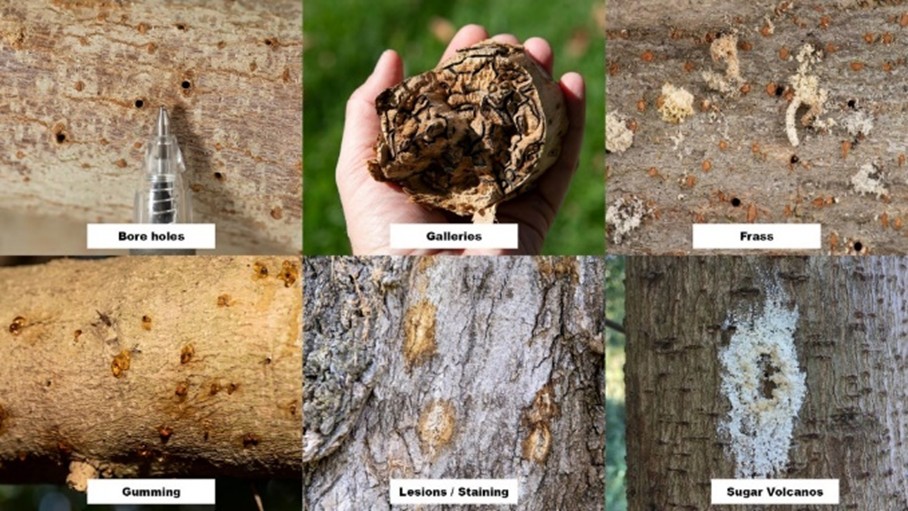
Signs of a possible infestation include:
- Small, round entry or exit holes in trunks and branches
- Sawdust-like material, known as frass, around the holes
- Thick resin, sap or gumming
- Crystalline foam that may resemble small sugar volcanoes
- Dark staining around entry holes
- Wilting, discoloured or dying branches
- Canopy dieback.
The City is reviewing its tree and environmental management practices, participating in technical forums and planning for the long-term management of PSHB on City-managed land.
PSHB does not usually travel far by itself. However, it can spread over much greater distances when infested firewood, green waste, mulch or plant material is moved.
You can help slow its spread by:
- Following the quarantine requirements for your area
- Not moving untreated wood, green waste, mulch or woody plant material outside the permitted zone
- Securely covering loads when transporting wood or green waste
- Using an approved green waste facility
- Checking trees on your property for signs of infestation
- Reporting suspected infestations to DPIRD
- Seeking advice before pruning or removing a tree you suspect is infested
- Cleaning pruning equipment, chainsaws and woodchippers after use
- Disinfecting equipment with 70 per cent ethanol, as recommended by DPIRD
- Buying wood mulch from reputable suppliers
- Using grass clippings or compost instead of mulch from an unknown source
- Considering suitable native species when planting new trees.
Visit the WA Tree Recovery Program webpage to check your eligibility and submit a claim.
More information
For current advice, quarantine maps and technical information, visit the DPIRD PSHB webpage.
You can also subscribe to DPIRD’s monthly PSHB eNews for news and updates about the Transition to Management response.
Always follow the latest DPIRD advice when managing a suspected infestation or moving wood and plant material.